Surah 2: The Cow, Part 2

To put last week’s post in brief, Surah al-Baqarah (lit. The Cow’s Chapter) is structured as a palindrome (and in fact, a palindrome consisting of palindromes!). The first half is largely about the willful rebellion among men and angels, the failed covenant of Judaism, the corruptions of revelation in Christianity, and the judgement of God over all things. The middle is going to pivot on a literal turning point in Islam. After that the surah will step backwards through the themes of the first half, but this time focusing on the new direction Islam is establishing. The structure that I was using to navigate the surah is as follows:

From this source. Posting again for your reference.

Although I had originally endeavored to cover the whole first half, I found it better to stop within the content of section D. The chart above doesn’t do full justice, as this section is more about asserting the authority of Muhammad as prophet*, the legitimacy of Ishmaelites/Arabs as heirs of Abraham, and the failures of the People of the Book (Christians and Jews) to preserve and understand God’s revelation within their own history and in Muhammad’s teachings. Again, this post will probably make the most sense only if you read the entire surah, as the material is scattered and I can’t follow the themes without jumping through the whole chapter. Otherwise today I’ll cover on ayat 94-203, approximately.

Continue reading “Surah 2: The Cow, Part 2”

Surah 2: The Cow, Part 1

Oy-vay. So perhaps, like the Bible, I would not suggest reading the Quran from front to back on your first time through. Having read through the light and gentle Introduction, the reader must next face Al-Baqarah, “The Cow.” It is the longest chapter of the Quran, with 286 ayat, and in fact also contains the longest ayah, the 282nd, which fills a whole page of the Quran. Are all these words about some cow? Certainly not! But a certain cow story (or two) within the chapter is memorable enough to warrant the moniker.

But more than the size of this surah, the content is problematic for a first-time reader with limited awareness of Islam. If you are predisposed to think Islam hateful or violent, there is plenty of content to feed that suspicion. Quite a bit of the surah denounces the failures of the Jewish and Christian communities (but particularly Jewish) to live by their own covenants. Many of the passages suggest a paranoia about members within and surrounding the Islamic community. Some of the violent mandates seem history specific, but that history is not included in the text and leaves the reader confused about their application. In a way, this surah practically opens itself up for the reader who wants to quote without context, because so many things are near this state already. I had to re-read the surah multiple times in order to keep re-evaluating it and giving it a fair chance. Knowing that this surah is important to so many people…

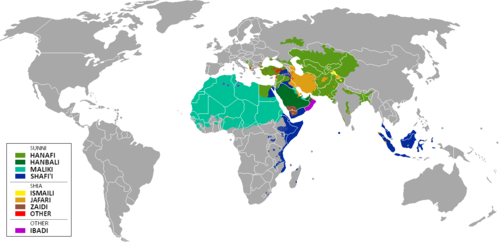
Image result for islam world map
So very many people

…I thought it was important to take the time and look with as much sympathy as I could at its intent and meaning.

Continue reading “Surah 2: The Cow, Part 1”

Surah 1: The Introduction

The first chapter of the Quran is a light and short reading, and appropriately called Al-Faatiḥa, “The Introduction.” It is a prayer and a psalm, from the speaker to God.

Screenshot_2017-07-11-15-46-20

Because this chapter is so short, I think it is easy and appropriate to give you the transliteration (my own) and translation (Sahih International):

Continue reading “Surah 1: The Introduction”

How Now to Proceed?

Firstly, I must start this post with a shame-faced admission that the resource I found most helpful when researching the structure of the Quran turned out to be…Wikipedia.

Dunce
I know, I know…

…but it was hard to use other resources for what I needed. I mostly wanted information about the Quran’s organization and literary qualities. What translations are best? How is it divided? Is there a method behind the way it is arranged? While most sites only offered pious instructions, Allahsquran.com, Wikipedia: Surah, and some scattered forums proved to be my best sources of general information. I’m sure that if I spoke Arabic properly, there would be many more quality resources available to me. As my current vocabulary only covers asking for coffee (an important life priority), it’ll be a while before I can get to them. Continue reading “How Now to Proceed?”

Developing Discipline

Despite the large gaps and few posts on this blog, the TwoPennyPosts is a project dear to me. I have actually started writing new posts many times. An idea catches my attention, I write it out, but then I take too long and try too hard to make every post some sort of gem. In the end, I always become discouraged and lose my first enthusiasm, whereupon the post gets discarded. So now I’m looking for some subject with which to discipline myself into well-paced and dependable writing.

Movies and games are common enough blog materials. I enjoy them, I enjoy critiquing media, and there are plenty of materials available to keep me queued with topics. But in the end, I get a lot of my dialogue about media with my immediate friends and family, and writing it out on paper is rarely as rewarding to me as the back-and-forth of conversation. Unless the movie is like “Maleficent,” where not many of my friends had seen it and not many were interested in dissecting it after having done so, I do not feel like reliving old conversations (and moreover rewriting my friends’ inspirations as if my own). There is too much quality commentary on those subjects for me to feel like I’ve something interesting to contribute.

I want to encounter something new. As said before, I am a WASP, whose every world history class has climaxed in the accomplishments of the United States as a world power. Mongols, Mughals, and Huns were all vaguely the same entity. Mouth-service was paid to the accomplishments of China and Japan, but any deeper examination of their politics, philosophies, or great leaders was missing. This enormous gap in my knowledge disturbs me. Okay, I was never actually as ignorant as to confuse the Mongols with the Huns, but I would never have been able to explain the specific motivations and cultures of each group except to murmur about horses and pillaging. And this is not something that I haven’t been rectifying over the years. I have already embarked upon the Arabic language as a vehicle to carry me into this historical gap. Considering the large amount of the world that has some connection to Arabic at least religiously, it seemed like a good starting place.

So why not read the Quran?

Obviously this is a very charged subject, and I’m a little nervous about the negative attention I might receive with my reviews. Some people might demand that I am to hate it and others might demand that I am to love it. Rather than going out to prove or disprove the Quran, my ambition is to get a sense of it’s religious beliefs, particularly as a criticism of Christianity. I am also struck by the fact that while I often hear a lot of what people have to say about what the Quran says, I’ve never seen the book analyzed in a way that actually looks at the text itself and in context with itself. I want to read the book directly and take the time to give it a fair chance to speak and build up its ideas.

I’ll be reading in English, mind you. My Arabic is not so advanced as to understand the Shakespearean level that is Qur’anic Arabic. I’ve already found a good app to read it with, “Holy Qur’an English,” on the Google play store. It’s a very pretty app, with almost too much translation aid (but as I’m learning Arabic, I’ll go ahead and keep that available).

But already the app is raising my questions. What’s a Juz? Why do they specify surahs as Meccan and Medinian? Where do the chapter names come from? Are the chapters in different genres? Also, some of these chapters are much, much longer than others. How much do I want to cover in a week? Is there some greater organization to know before I start reading? I myself would not recommend reading the Bible from front to back as a general first experience. Is there a better reading order to the Qur’an?

My goal this week is to do some research and get a structural grip on what I’m diving into. Gather some logistics, set a battle plan, figure out some context. Then I’ll start my official reading.

Until then, مع السلامة!

Live Long and Love Meeeeeeeee!

When I first entered college in 2008, I came fresh-faced from the world of homeschooling. I had no experience with the high school dramatics, the dating scene, or cultural fads. The world that I found was suffering a new trend, one that shook all those things. It seemed that the female population had withdrawn their affections. The men could be seen despondently wandering the halls, playing games without joy, and eating food that did not fill their appetites. They’d murmur their complaints to each other in low voices, until the gathering would dissolve with the disaffected shrug, “Who is Edward Cullen?”

Sorry, Ms. Rand, couldn’t resist.

Continue reading “Live Long and Love Meeeeeeeee!”

What Is, Is

Something simply is. It exists for its own reason with no beginning and presumably no end. I know something exists because I am experiencing something. I know that I am finite, therefore I also know that something bigger than me has to exist in order to enable my own. Philosophy plays a lot of circular games trying to pinpoint definitions for experience and existence, but let’s just skip all that and lay down an axiom: something just exists and it doesn’t need our awareness to do so.

I spend my life struggling to make sense of the world. The cornerstone for my search for truth is this: what is that ultimate thing that simply exists, and how does that affect us? There are many answers and I’m obsessed with hearing them all–particularly in personal accounts of personal beliefs. I’m interested in hearing each person’s individual struggle to discern the absolute thing that exists and determine how that affects their life. That’s what makes religion. Each time I meet a new person, I have to evaluate their conclusions and reevaluate my own. It’s very tiring, and yet exhilarating, to always be awake to life and existence. It keeps my eyes open to what is beautiful and ugly, and it prevents me from getting lost in my own tiny life and missing the big experience. So if this blog is a brain exercise to help me organize my thoughts enough to communicate, then I’d like to try and lay out the basic gists that I have come across.

What simply is?

Continue reading “What Is, Is”

Feminist?

Am I a feminist?

The conversation usually runs like the last thirty seconds of this video:

To identify a feminist, the person in question is usually asked, “Do you think women should have the same rights as men? Yes?  Then you’re a feminist!”  Another variation is “Do you believe women are lesser beings than men? No? Then you’re a feminist!”  By both those counts, I am a feminist.

So why does my eye twitch a bit at this answer? Continue reading “Feminist?”

The Santa Claus Paradigm

The subject of Christmas–it’s hypocrisies, contradictions, virtues, meanings–is well hashed out. While I was tempted over the season to write a little piece about holiday practices and festivities, it failed to catch enough passion in me to inspire thoughts worth even two cents. But then I had a conversation with a friend, and she dropped reference to the traumatic childhood disappointment of learning that Santa Claus wasn’t real. This dusted off some old thoughts in my mind, and the more I examine them the more upset I get. Continue reading “The Santa Claus Paradigm”

“For women,” eh?

I don’t feel the need to have a woman in a movie to watch it. If a film has an entirely male cast, it doesn’t bother me unless the men make a point of bashing and excluding women. What is hard to swallow is that there aren’t many movies centered around the interactions of women. They exist, but they seem to have a hard time spreading into other genres–particularly adventure type stories. Movies with primarily female casts seem to also often be movies about being women, instead of just human beings who happen to be women. A movie like “Up” could be just as good with a cantankerous old woman and ambitious girl-scout. “Mean Girls” done with boys doesn’t translate too well.

And yet, whenever a movie comes out claiming to be “female centric” my eye gets very critical. I rather wish that it could just come out without having to push for a gender-representation angle on publicity, but I understand why it happens. They’re making an effort to even out the representation, and that’s very nice of them and good for our culture. Yet when they bank the hype of a movie on the fact that it’s aimed to feature my half of the gender pool, it makes it all the worse when they do a bad job. It’s not enough to get a sloppy present and hear them say “But I made this for you.” What movie am I leading to?

Well, well, well…

Continue reading ““For women,” eh?”